
Why Your Joints Ache More as the Weather Turns Cold
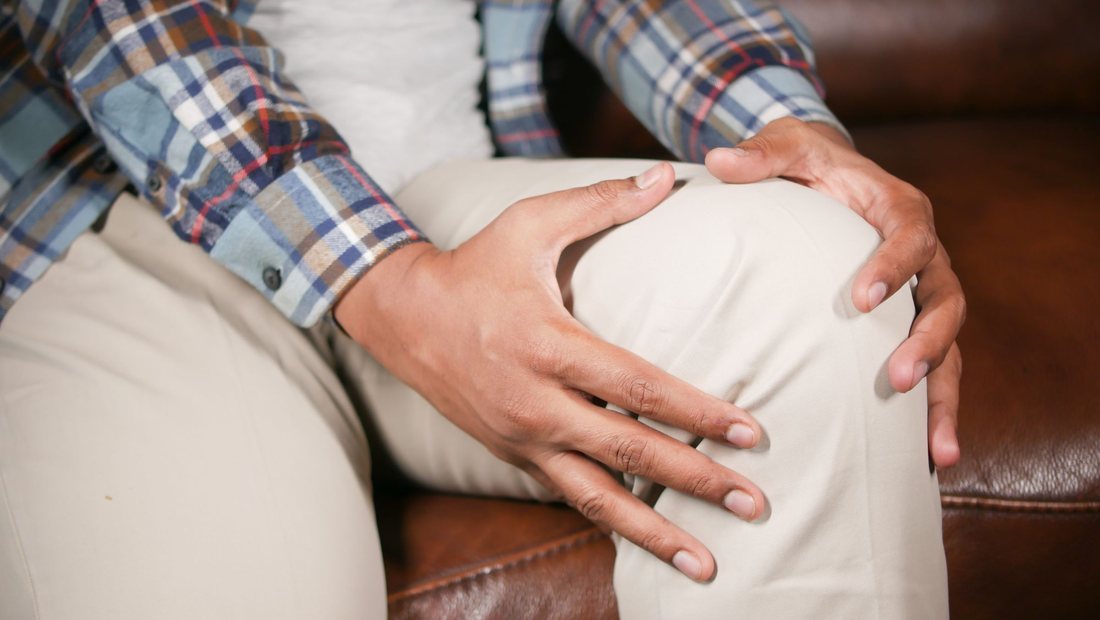
Ask anyone with an old knee injury and they will tell you they can feel the weather changing. For a long time that was treated as folklore. It is now one of the most consistently reported experiences in musculoskeletal care, and while the exact mechanism is still debated, the pattern itself is real enough that we plan for it — every October, our Oshawa clinic gets busier with aching joints.
What actually changes when it gets cold
Several things happen at once, and they compound.
- Tissue gets stiffer. Muscle, tendon and the soft tissue around a joint are all less elastic when cold. The same movement meets more resistance
- Blood flow shifts. In cold weather the body prioritises the core, so less circulation reaches the hands, feet, knees and elbows — which is part of why those are the joints people notice
- You move less. This is the big one, and the most overlooked. Joints are fed by movement; a joint that moves less through October is a stiffer, more uncomfortable joint by November
- Barometric pressure drops. The leading theory is that falling pressure allows tissue around a joint to expand very slightly, which an already sensitised joint notices
Notice that only one of those is about the weather itself. The rest are about what cold weather does to your behaviour — which is the part you can actually change.
Why old injuries speak up in autumn
A joint that has been injured before is often more sensitive afterwards, even once it has fully healed. The surrounding tissue may be slightly less mobile, and the area is frequently monitored more closely by the nervous system. Add cold, stiffness and a drop in activity, and an area that was quiet all summer becomes noticeable again.
This is not the injury coming back. It is usually an area with less tolerance than the rest of you, meeting a season that demands more.
Arthritis and the first cold snap
If you have osteoarthritis, autumn is often when symptoms become harder to ignore — most commonly in the knees, hips and hands. It is worth being clear about what that means: a flare in cold weather does not indicate that the joint is deteriorating faster. It means the joint is more symptomatic right now.
That distinction matters, because the instinct during a flare is to rest the joint completely, and for most arthritic joints that makes the following week worse rather than better.
Stiffness, or something worth looking at?
Ordinary cold-weather stiffness tends to be worst first thing, eases within fifteen or twenty minutes of moving, affects both sides fairly evenly, and does not stop you doing things.
Book an assessment if instead you have pain that is still there after half an hour of moving, swelling or heat in the joint, a joint that gives way or locks, clearly one-sided symptoms, pain that wakes you at night, or aching that is steadily worse week on week rather than fluctuating with the weather.
What actually helps
Warmth first, movement second, and consistency above both.
- Warm the joint before you demand anything of it — a warm shower, or simply layers over knees and hips before going out
- Keep moving, but spread it out. Short, frequent movement suits stiff joints far better than one long session
- Do not rest it completely. Comfortable range of motion, several times a day, is what keeps a joint tolerable through winter
- Build the muscle around it. Strength through the hips and thighs changes how much load reaches an arthritic knee, and it is the single most effective long-term measure
- Stay on top of it. The people who have the easiest winters are the ones who did not stop in October
Five minutes before you get out of bed
Morning stiffness is worst in the first few minutes, which are also the minutes in which most people make a sudden movement. Before standing up: pull each knee gently to your chest a few times, roll your ankles, press your lower back gently into the mattress and release, and roll your shoulders. It takes very little time and makes the first twenty minutes of the day considerably easier.
If it is more than stiffness
A proper assessment establishes whether you are dealing with normal seasonal stiffness, an old injury that needs attention, or arthritis that would respond to a structured strengthening programme. Our Oshawa team offers physiotherapy, chiropractic care, massage therapy and acupuncture, and we will tell you plainly which, if any, is likely to help.
Aching more than usual?
An assessment will tell you whether it is stiffness or something worth treating.
Have a question about your recovery?
Our team is happy to help — book online or give us a call.